OCC Contamination: How Plastic, Tape, Metal & Dirt Change Plant Design
See how plastic film, tape, metal and dirt change OCC recycling plant design, separation points, dust control, maintenance and acceptance testing.
Contamination Is a Plant Design Input, Not a Cleanup Detail
An OCC load can be mostly corrugated fiber and still behave badly in a dry recycling line. A few long strips of stretch film can wrap around rotating parts. Bale wire can travel farther than expected before it is liberated. Tape can be shredded into small flexible fragments that are harder to separate than the original strip. Dirt and grit can become a wear and dust problem long before they become a visible product-quality complaint.
For that reason, contamination should be described by type, form, frequency and attachment, not by one broad percentage. “Three percent contamination” is not enough information to select a plant. Three percent loose film, three percent steel pieces and three percent damp soil create completely different risks. The engineering question is: what does the unwanted material do when it meets the receiving system, the cutter, the magnet, the air system and the downstream fiber opener?
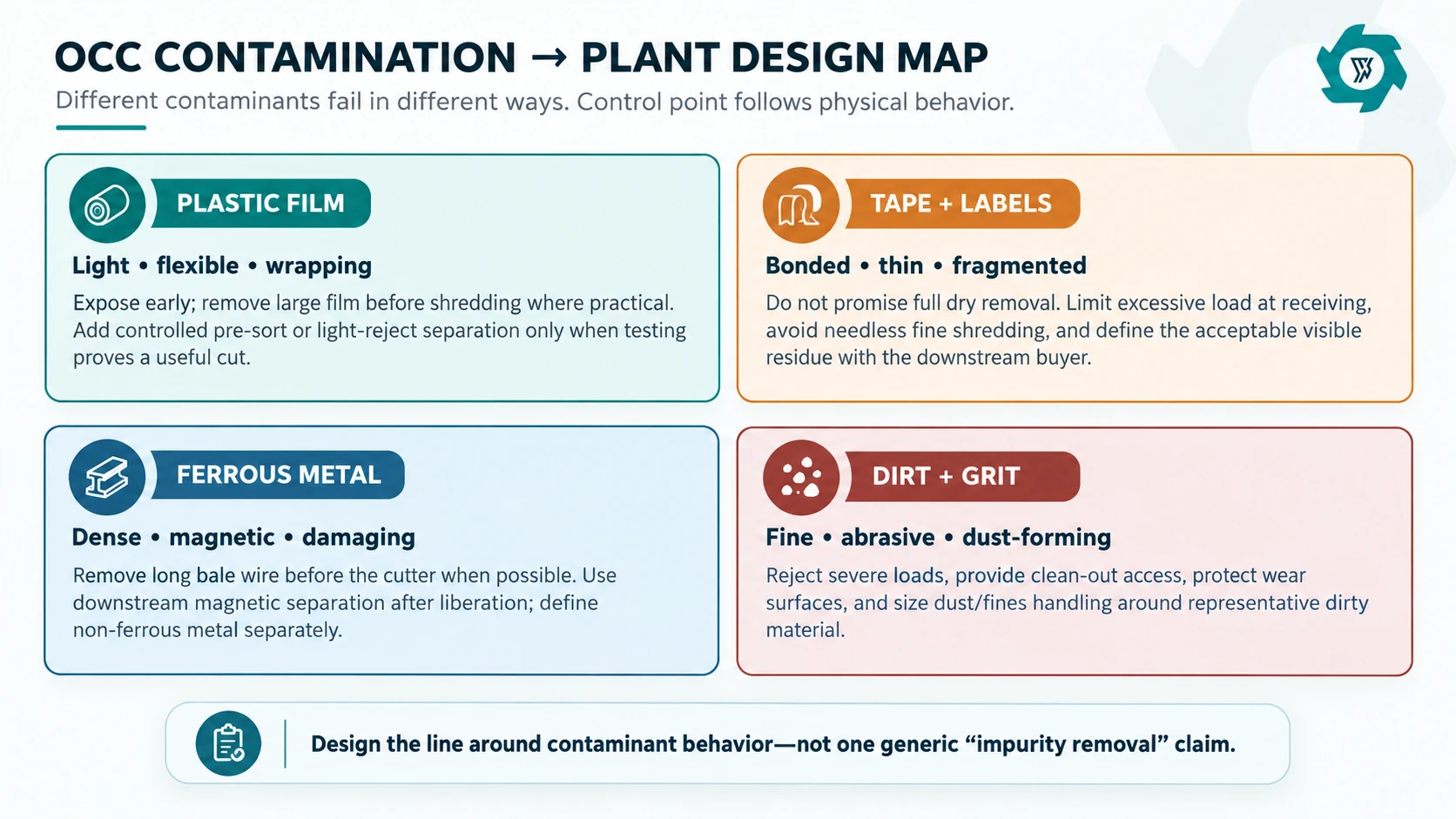
Plastic film usually pushes the design toward early inspection, controlled opening and selective light-reject removal; tape and labels require realistic limits because dry separation cannot guarantee their complete removal; ferrous metal requires both upstream wire control and downstream magnetic separation; dirt and grit increase abrasion, dust load and cleaning demand. A useful OCC recycling plant therefore treats contamination as a feed specification and acceptance-test variable.
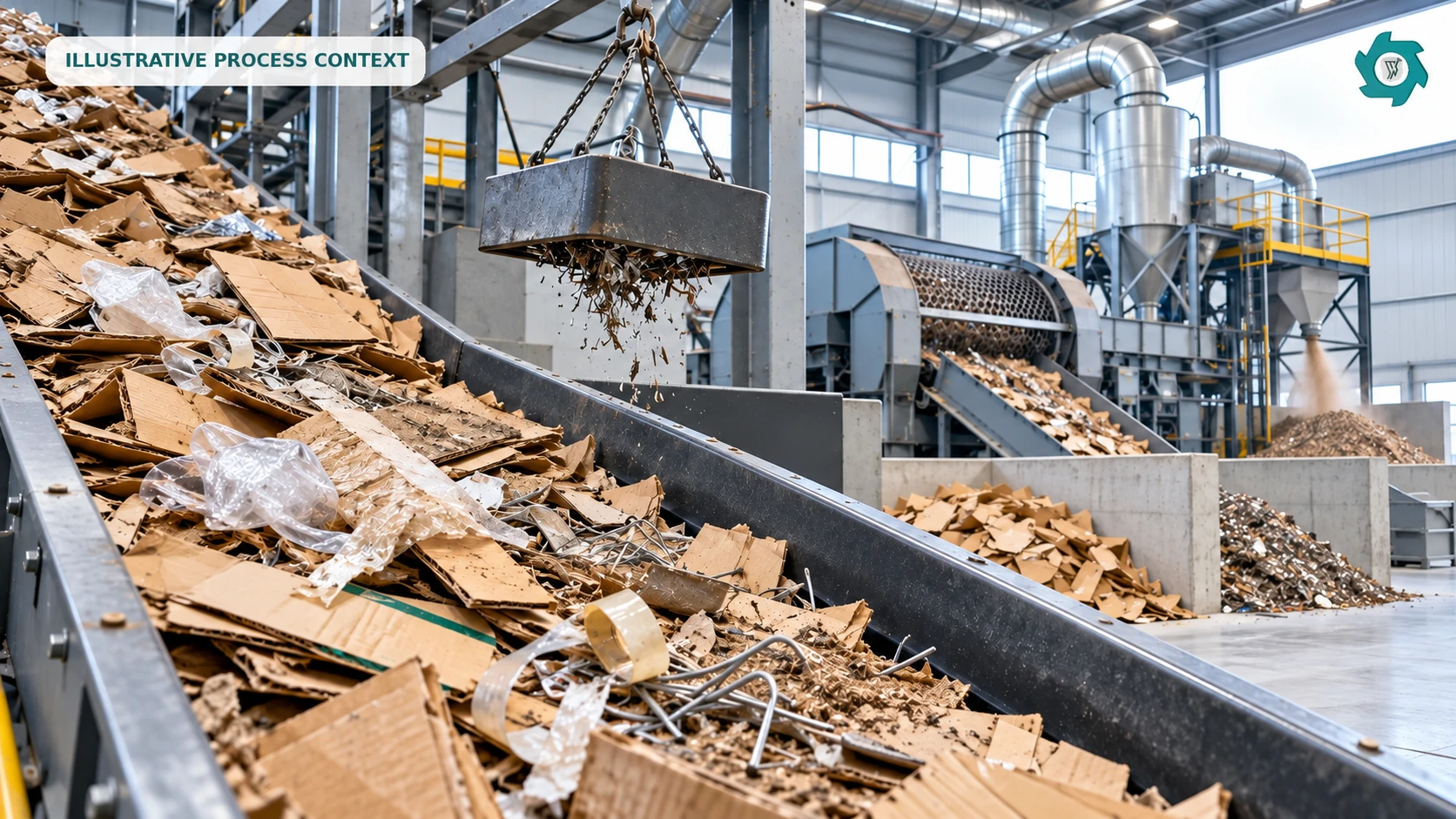
Illustrative process context: contamination becomes easier to manage when the line exposes it deliberately and assigns each material to a realistic control point.
Why One Contamination Percentage Is Not Enough
Recovered-paper contracts need numerical limits, but equipment design needs a second layer of description. ReMA’s current OCC specification gives a common trading baseline: Item 11 Old Corrugated Containers allows up to 1% prohibitive materials and up to 5% combined outthrows plus prohibitives.[1] ReMA also defines prohibitive materials to include material that can make a paper pack unusable as the declared grade or may damage equipment.[2] Those definitions are commercially useful, but they do not tell an engineer whether the unwanted material is a sheet of film, a long wire, a steel block, fine grit or adhesive attached to every carton.
Two incoming lots can meet the same headline percentage and still require different front ends. Large film is visible and can often be pulled before shredding. A similar mass of narrow film strips may be distributed through an opened bale and wrap repeatedly. One heavy steel object may be unacceptable because of damage risk even though its mass fraction is low. Dirt may not create one dramatic trip, yet its cumulative effect on wear, dust collection and housekeeping can dominate maintenance.
A practical contamination profile therefore includes the material category, typical piece size, whether it is loose or attached to fiber, how often it appears, and the difficult-but-normal condition the plant is expected to accept.
Contaminant description
Missing information that changes design
Why it matters
“Plastic”
Film, bags, rigid inserts, straps, laminated board; loose or bonded
Flexible film wraps and floats; rigid pieces behave more like discrete solids.
“Tape”
Wide packing tape, labels, reinforced tape, adhesive coverage and attachment
Attached tape often follows the fiber until size reduction creates smaller fragments.
“Metal”
Bale wire, staples, strapping, nails, loose parts; ferrous or non-ferrous
A magnet only acts on magnetic material, and long wire behaves differently from small liberated pieces.
Affects wear, floor cleanup, dust transport and reject handling as well as product cleanliness.
Plastic Film Changes Feeding, Wrapping Risk and Light-Reject Design
Stretch wrap and thin bags are difficult because they have little mass but a large surface area. They can drape across conveyors, bridge at transitions and wind around shafts or exposed rotating parts. After a bale is opened, the film may be easy to see; after aggressive size reduction, the same film can become dozens of strips mixed through paper pieces.
That is why the first design decision is often where to expose the film without fragmenting it. Merchant bales may need a controlled opening and inspection zone. Loose warehouse cardboard can be inspected on a receiving conveyor before the cutter. Operators need safe access, adequate lighting and a defined reject container. The aim is not to hand-sort every label from every box. It is to remove the large, high-consequence items while they are still easy to identify.
An air or light-reject separator can help later, but only when a representative test shows a useful density and aerodynamic split. Film is light; so is valuable paper fiber. Increasing airflow until every film fragment leaves the product can also send usable fiber into the reject stream. The right test therefore weighs both sides: how much unwanted light material is removed, and how much acceptable fiber leaves with it.
Selection note: do not add a light-reject separator simply because the feed contains “plastic.” First identify the plastic form. A light film problem and a rigid-plastic problem are not the same separation duty.
The broader OCC recycling equipment guide explains the overall dry-line functions. For contamination control, the useful addition is to place the separator only after the material has been opened enough for the target plastic to behave differently from the fiber.
Tape and Labels Are a Removal-Limit Problem
Tape creates a different engineering problem from loose plastic film because it is usually attached to the cardboard. Packing tape may cross box seams, labels may cover printed areas, and some packaging combines paper, film and adhesive in one bonded structure. A dry shredder can reduce the size of that composite, but size reduction is not the same as separation.
Large tape tails may be removable before the shredder. Once the tape is cut into small pieces, its geometry begins to overlap with the paper fraction. Mechanical opening can release some bonded pieces, yet it can also create small fragments that are harder to identify visually. Air separation may remove some light pieces, but it cannot be assumed to remove thin tape or labels that stay attached to paper.
For a dry line, the more defensible design is to control excessive tape load at the incoming boundary, avoid unnecessary over-shredding, and define what the downstream customer will actually accept. If the end user is a paper mill with tight stickies or stock-cleanliness requirements, the mill’s wet screening and cleaning system remains a separate process boundary. A dry preparation line should not be presented as a guaranteed substitute for fine wet-stock cleaning.
This is one reason the waste paper cellulose recycling line should be discussed with the intended end use, not only the incoming tonnage. A transportable dry fiber-rich product and finished paper-machine stock are different outputs.
Metal Changes Protection Strategy Before It Changes Product Purity
Metal in OCC is often discussed as a purity issue, but the first concern is equipment protection. Bale wire, steel strapping, staples, nails and accidental ferrous parts do not behave the same way. Small staples may travel with the cardboard until the material is opened. Long bale wire can snag, wrap, whip or bridge. A single dense metal object can create a shock load that is out of proportion to its percentage in the feed.
Where practical, long bale wire should be removed under a defined safe procedure before the material reaches the shredder. The line can still include a magnet because not every ferrous piece will be visible at receiving. After the cardboard is opened and reduced, previously buried staples, wire fragments and nails are easier to expose to a suspended or overband magnet.
Magnet position is as important as magnet presence. A deep, uneven bed can bury steel under cardboard. Excessive burden depth and poor presentation reduce the chance that the magnetic field can lift a piece clear. A metered conveyor and a spread material layer can therefore improve both feeding and metal removal. The double shaft shredder may be suitable for primary reduction in some OCC projects, but the correct protection scheme still depends on what metal enters and how it is presented.
Non-ferrous metal needs separate consideration. Aluminum clips or other non-magnetic pieces will not be captured by a conventional magnet. If such material is a recurring and commercially important contaminant, the project needs a different separation discussion rather than a broader claim that “metal is removed.”
Each contaminant changes a different part of the line. The useful specification connects physical behavior to a control method and a measurable limit.
Dirt and Grit Change Wear, Dust and Housekeeping
Dirt can be underestimated. In practice, a dirty OCC stream can change daily maintenance more than a cleaner stream with occasional visible plastic. Sand and grit move through chutes, cutter areas and transfer points. They settle in low spots, abrade surfaces and become part of the fines stream. Wet dirt can also smear, stick and turn a simple dry clean-out into a more difficult task.
This is where the receiving specification and the dust system meet. A plant that is tested only on clean, dry cartons may show low filter loading and easy cleanup. The same line can behave differently when normal production includes dusty retail bales, floor-swept cardboard or packaging stored outdoors. Dust extraction should therefore be evaluated with representative material, not sized from the cardboard mass flow alone.
OSHA identifies combustible dust as one of the hazards relevant to paper recycling operations, and its combustible-dust guidance includes paper and plastic dust among materials that can present a deflagration hazard under appropriate conditions.[3][4] That does not mean every OCC line has the same explosion classification or protection system. It means dust capture, housekeeping, ignition-source review and the final installation must be assessed for the actual process and local requirements.
From a mechanical perspective, dirty feed also justifies more attention to access. Provide clean-out doors where material settles, room to remove fines containers, inspection points before sensitive equipment and wear parts where abrasion is expected. A difficult cleaning task that takes forty minutes every shift can become a capacity problem even if the shredder itself never reaches its drive limit.
Put Each Control at the Earliest Effective Point
The most reliable contamination strategy is not “sort everything before shredding” and it is not “let the downstream separators handle it.” Some contamination is hidden inside bales and must first be exposed. Some metal becomes easier to remove only after liberation. Some film becomes harder to remove after it has been cut into narrow strips.
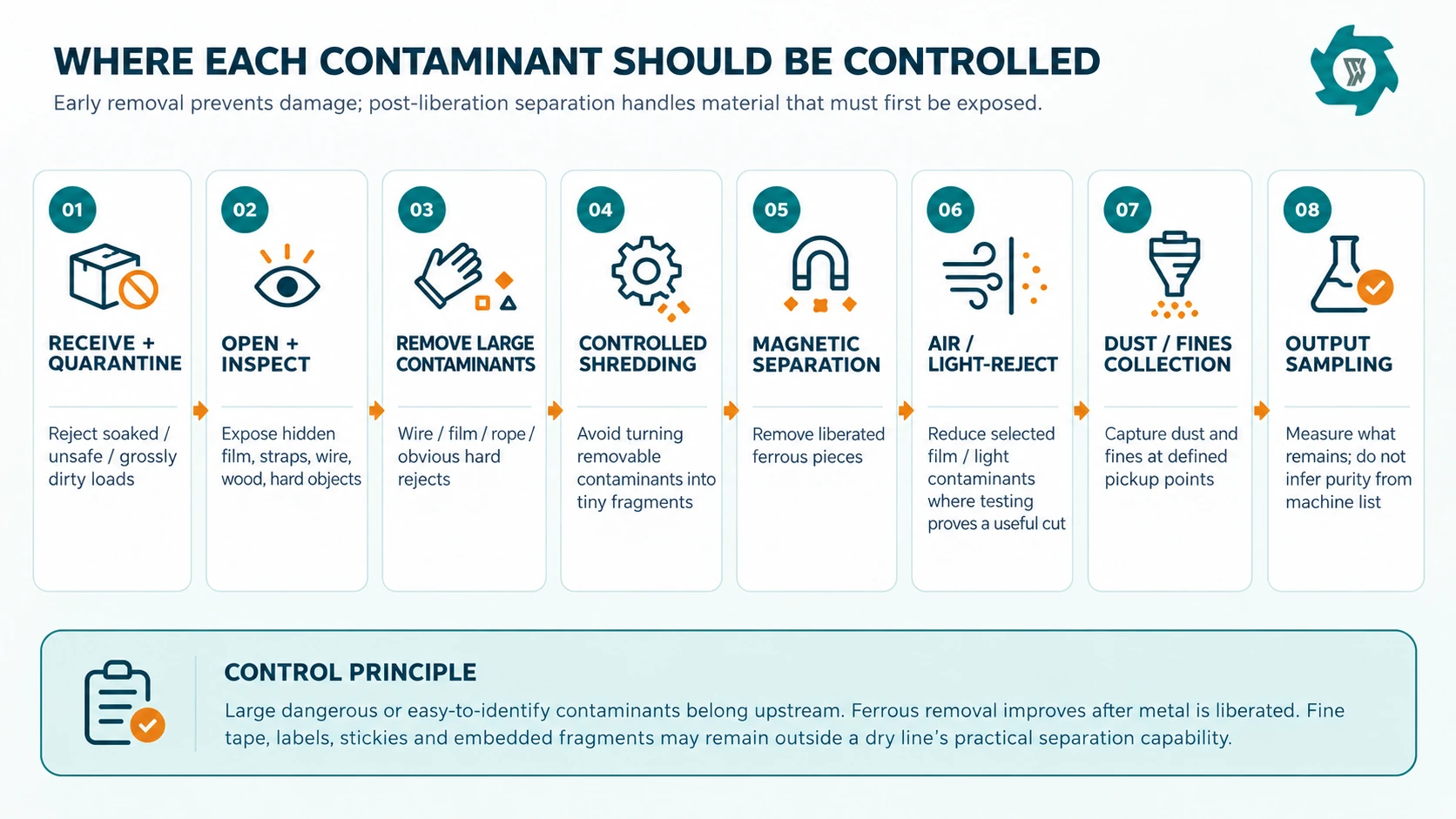
A practical sequence is to assign each contaminant to the earliest point where it is both visible and practically separable. Grossly unsuitable loads belong at receiving or quarantine. Large film, rope and long wire belong around bale opening and inspection. Ferrous fragments are often best captured after opening or primary size reduction. Fine dust belongs in dedicated capture and collection. Residual tape and small bonded labels may need to remain an agreed product-quality limit.
Contaminant control works best as a sequence: reject what should never enter, remove what is easy while it is large, then separate what must first be liberated.
Use a Separation Matrix Instead of a Generic “Impurity Removal” Line Item
When comparing quotations, ask the supplier to state what each proposed separation stage is expected to remove, what it cannot remove, and what feed condition it needs. This exposes the difference between a real process design and a machine list.
Control method
Strongest use in OCC
Important limitation
Evidence to request
Receiving inspection / quarantine
Unsafe loads, gross dirt, soaked material, large hard objects
Cannot see everything hidden inside a compressed bale
Contamination Changes Practical Capacity Even When Motor Power Does Not Change
A clean-cardboard capacity trial can hide the time cost of contamination. Operators may stop feeding to pull film, remove wire, clear a chute or empty a reject bin. Automatic reversals may increase when flexible material wraps or when hard objects reach the cutter. The dust collector may need more attention. None of those events changes the nameplate motor power, but they reduce sustained accepted output.
This is why contamination belongs in the capacity basis. If the contract says the line will handle merchant OCC with defined normal contamination, the factory or site acceptance test should include representative contaminated material within that agreed boundary.
Record elapsed test time, stable running time and operating events. Separate planned pauses from process interruptions. Log automatic reversals, trips, operator interventions and manual clearing.
Design Maintenance Around Where Contaminants Accumulate
Maintenance access is often drawn around the main machine and forgotten around the reject path. Contaminated OCC makes the reject path a working system. Film bins fill, wire needs safe collection, dust and fines must be removed, and material can lodge under conveyors or at chute transitions. Those tasks need physical space.
During layout review, trace the contaminant route with the same care used for the product route. Can an operator reach the pre-sort position without standing in the loader path? Can a wire bin be removed without crossing under a suspended load? Can the magnet discharge its ferrous material into a container that is actually accessible? Can dust containers be changed without spilling fines back into the plant? Is there a safe isolation procedure before wrapped material is cleared from a shaft or conveyor?
Build a Contamination Passport Before Requesting a Final Configuration
A better RFQ package includes a short “contamination passport” for each regular supplier or source category. It does not need to be complicated. The goal is to show what the line sees on an ordinary day and what it sees on a difficult day that the plant is still expected to process.
Field
What to record
Why it changes the plant
Plastic
Film vs rigid; largest pieces; loose vs attached; approximate frequency
Decides pre-sort need, wrapping risk and whether light separation deserves testing.
Tape / labels
Coverage on boxes, tape type, bonded laminates, difficult examples
Sets realistic dry-removal limits and downstream acceptance questions.
Changes wear, clean-out, screening and dust/fines handling.
Variability
Normal, poor supplier, rainy-season, returned retail loads
Prevents design around a single clean sample.
When equipment selection is still open, compare the required material state at the next process step. The article on cardboard crusher vs shredder vs grinder is useful for that machine-level decision; the contamination passport tells the supplier what abnormal loads the selected machine must survive without turning them into a downstream problem.
Make Contamination Visible in the FAT Mass Balance
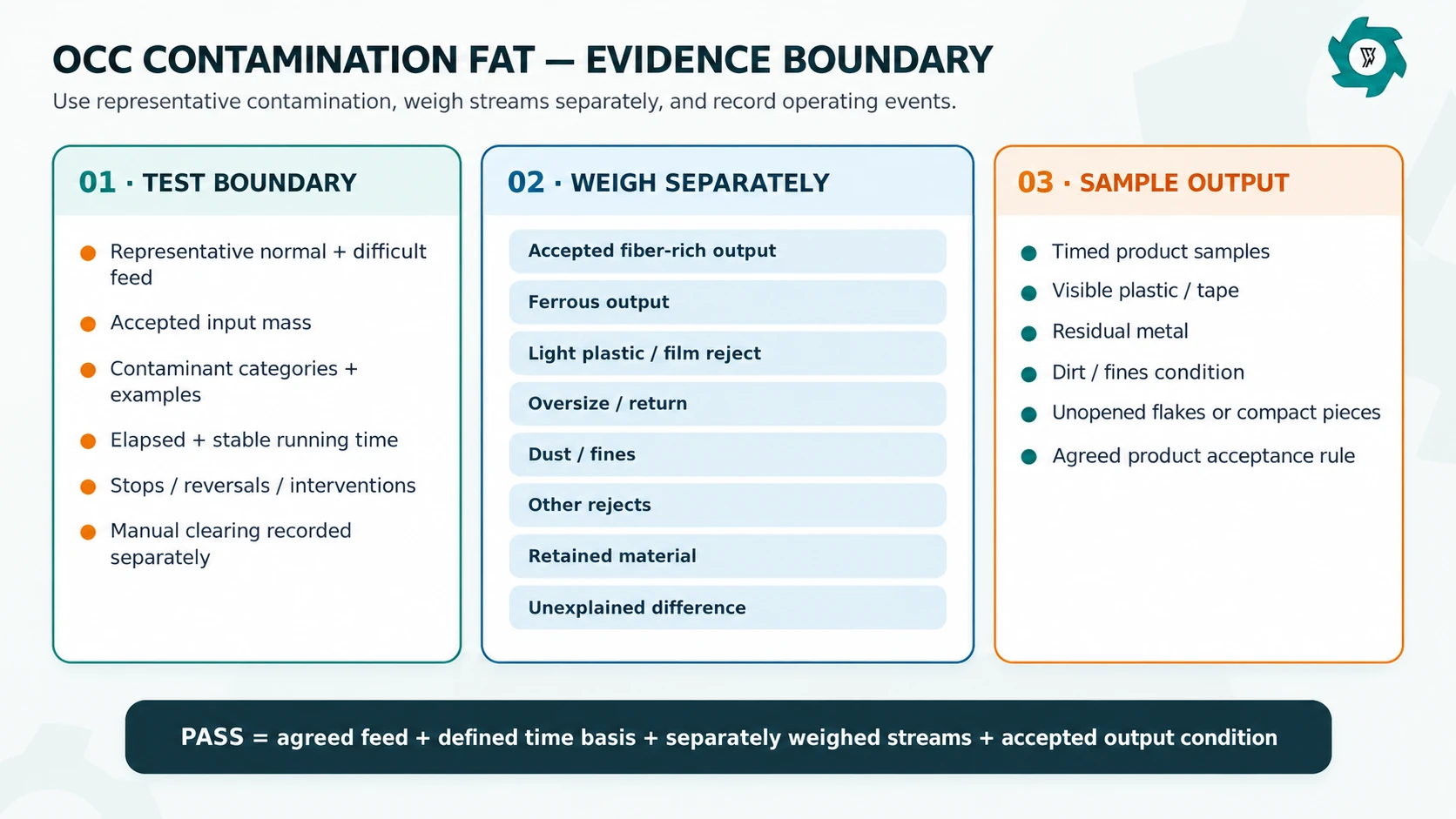
Define the test boundary before material is fed. Use representative OCC, including difficult-but-normal examples inside the agreed incoming specification. Weigh the accepted input and then keep the important exit streams separate.
For a contamination-focused FAT, the useful streams can include accepted fiber-rich output, ferrous output, light plastic or film reject, oversize or return, dust and fines, other rejects, retained material and unexplained difference. Not every plant has every stream, but do not merge categories merely to make the mass balance look simpler. Retained material is physically still in the system.
Take timed samples of accepted output as well. Check visible plastic, tape, residual metal, dirt/fines condition and any other project-specific criterion. If the downstream buyer has a written acceptance method, use that method. If not, agree a practical sample mass, timing and category method before the test starts.
A useful contamination FAT proves more than throughput: it ties representative feed, operating events, separately weighed outputs and sampled product quality to one defined test boundary.
Five Design Mistakes That Make Contamination Worse
Shredding before inspecting. Large, removable contaminants become smaller and harder to separate after the cutter.
Calling one magnet an impurity-removal system. A magnet is valuable for ferrous protection, but it does not address film, tape, dirt or non-ferrous metal.
Adding stronger airflow without measuring fiber loss. Light-reject removal can improve while saleable fiber is also lost. Both streams need to be checked.
Testing only clean feed. A line that looks stable on dry carton offcuts may show very different event frequency on merchant OCC with film, wire and dirt.
Writing “clean fiber” instead of an acceptance condition. Product language should say what is sampled, how contaminants are categorized and what constitutes an acceptable result.
The Design Rule: Remove Early, Separate After Liberation, Measure What Remains
Plastic, tape, metal and dirt should not be grouped under one “contamination” box in a quotation. Large film and wire often deserve early removal. Ferrous fragments become easier to capture after they are exposed. Dirt changes wear and dust handling. Tape and labels reveal the practical limit of a dry process because some bonded fragments may remain with the fiber-rich product.
The best project data is therefore not one contamination percentage. It is a representative feed profile tied to a process boundary and an output acceptance method. Once that is available, the supplier can decide where inspection belongs, whether additional separation is justified, what maintenance access is needed and how to test the line without hiding rejects inside a headline throughput figure.
Build an OCC Line Around Your Actual Feed
Send representative OCC photos or video, loose or baled condition, plastic/tape/metal/dirt examples, normal and difficult feed condition, required accepted-output rate, target output condition, operating hours and workshop constraints. The configuration can then be built around the contamination your plant actually receives.
Frequently Asked Questions
Can an OCC recycling plant remove all plastic and tape?
Large film and other visible contaminants can often be removed by source sorting, bale opening and pre-sorting, while some light rejects may be reduced by dry separation. Thin tape, labels, adhesive fragments and small plastic pieces can remain mixed with the fiber-rich output. The acceptable residual level should be agreed with the downstream buyer and verified by sampling.
Should bale wire go through the shredder so the magnet can remove it later?
Long wire is easier to control before it enters the cutter and can wrap, snag or create maintenance problems. A downstream magnet is still useful for ferrous pieces that remain or become exposed after size reduction, but it should not replace a defined wire-removal procedure.
Why does dirt change more than the final product quality?
Dirt, grit and small hard particles can increase abrasion, contaminate dust and fines streams, load screens or filters and create more cleanup work. A line expected to receive dirty OCC needs accessible clean-out points, realistic wear assumptions and dust handling based on representative material.
Where should plastic film be removed in a dry OCC line?
Remove large, visible film as early as practical, preferably after the material has been opened enough to inspect but before unnecessary size reduction fragments it. If an air or light-reject separator is proposed later, test it on representative feed and measure both reject removal and useful fiber loss.
How should contamination be tested during FAT?
Define the representative feed, weigh accepted input, record elapsed and stable running time, log stops, reversals, operator interventions and manual clearing, and weigh the relevant product and reject streams separately. At minimum, keep accepted output, ferrous, light plastic or film reject, oversize or return, dust or fines, other rejects, retained material and unexplained difference visible when those streams exist.